
Parque de la Memoria Argentina: A Warning for the United States
What Parque de la Memoria Argentina Teaches About State Violence
On weekends, I love to walk Palta, my dog, along the river at Parque de la Memoria in Buenos Aires. It is one of the few places where the city slows down. The Río de la Plata feels wide and quiet. The noise fades enough to let you think.
That word, think, matters here. It is carved into steel.
One of the first memorials reads: Pensar es un hecho revolucionario. Thinking is a revolutionary act. The sentence is split across two large steel slabs. You must piece it together yourself. The sky and river fill the gaps. It is beautiful and unsettling. Palta, enjoys the shade the structure lays out for her. It's one of her favorite spots to lie down and relax after chasing balls.
This park remembers the victims of Argentina’s last military dictatorship, from 1976 to 1983. People were kidnapped, tortured, and murdered by the state. Many were thrown alive from airplanes into the Río de la Plata during what became known as the death flights. Pablo Míguez was one of them. He was 14 years old.
When I moved to Argentina, I never imagined this park would warn me about the United States today.
Parque de la Memoria Argentina stands as a public space designed not to comfort, but to confront visitors with the consequences of state violence, silence, and delayed accountability.
Memory and State Violence in Argentina
Parque de la Memoria does not soften history. The signs are clear and direct. They explain how the dictatorship worked. They show how secret detention centers operated. They explain how forced disappearance became policy. They also name who helped.
One sign explains the role of parts of the Catholic Church. Some priests supported social movements and were punished or killed. Others in the Church knew what the military was doing and cooperated. They used familiar excuses: order, stability, and Christian values.

This is not opinion. It is documented history.
Standing here, it is hard not to think about the United States today. The situations are not the same. The logic feels familiar:
• Religion aligns with power
• Faith excuses punishment
• Morality justifies violence.
History does not repeat itself. It echoes.
Policing, Immigration Enforcement, and Fear
During the dictatorship, security forces took people without warrants. They stopped people on the street. They dragged them from their homes. They pushed them into unmarked cars. This should sound familiar. The Ford Falcon became a symbol of fear because it was everywhere.

In the United States, immigration enforcement follows different laws. The experience can still feel similar. Agents raid homes and stop people in public. They detain people without criminal charges. Unmarked vehicles and plainclothes, masked officers are common. Families live with constant fear.

This does not mean the United States is repeating Argentina’s past exactly. Argentina’s system aimed to erase people forever. Fear does not need perfect copies. It needs uncertainty and unchecked power.

When fear becomes normal, the danger grows fast.
Detention Centers and Everyday Cruelty
Argentina’s dictatorship used secret detention centers. They were illegal and hidden. Torture and murder happened inside them.
The United States uses detention centers that operate under legal authority, but not with transparency. Lawmakers and journalists are often blocked from visiting. Independent oversight is routinely denied.
In early 2026, deaths and violent enforcement actions connected to U.S. immigration enforcement moved into public view. Two U.S. citizens, Alex Pretti, a 37-year-old nurse, and Renée Good were shot and killed by federal immigration agents during enforcement operations in Minneapolis. Video reviewed by Reuters and other outlets shows that in Pretti’s case he was filming and assisting others when he was shot, prompting widespread protests and calls for a full investigation. At least six people have died in ICE detention centers so far this year. In 2025, at least 30 people died in immigration detention, the highest number in roughly two decades.

A detailed timeline of the incident, including video analysis and official statements, is documented by the New York Times.
Mass detention is a choice. It shows whose lives matter less. The people inside these centers are not numbers. They are workers, students, parents, and children from many countries and backgrounds.
One lesson from Argentina is how normal repression became. It did not look chaotic. It looked orderly. It relied on rules, forms, and routines.
That is how cruelty becomes acceptable.
Thinking as Resistance
The sculpture at the park’s entrance sends a simple message. Thinking is revolutionary. Not shouting. Not slogans. Thinking.
Authoritarian systems understand this. They do not ban thought right away. They wear people down. They flood daily life with fear and distraction. Thinking feels risky. Silence feels safer. Media control helps this process.
In the United States, this pressure shows up through media consolidation. Wealthy owners and political allies gain control. Power spreads without uniforms or force.
Parque de la Memoria breaks this pattern. It slows you down. It makes you read. It forces you to connect cause and effect.
Walking my dog here, I see memory as pattern recognition. I notice when power serves itself. I notice when enforcement replaces justice. I notice when cruelty is called necessary.
Thinking disrupts that process.
This park stands by the river to make forgetting uncomfortable.
Plan Cóndor, the United States, and a Turning Warning

When USAmericans write about Argentina’s dictatorship, locals often respond the same way. This history did not start here.
South American military regimes worked together through Plan Cóndor. They shared intelligence. They tracked opponents. They killed across borders. Cold War politics supported this system. The United States played a key role.
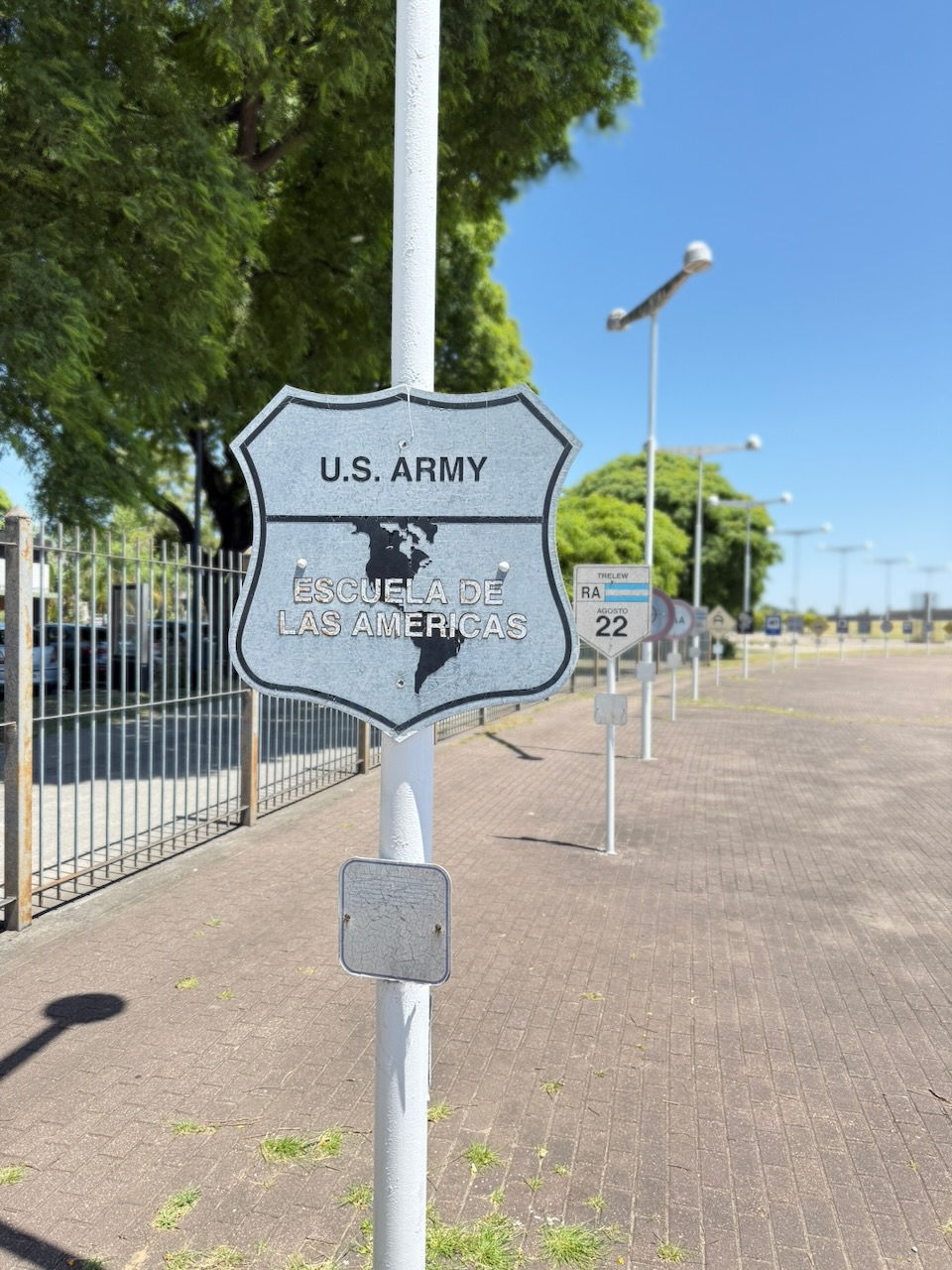
Declassified documents show U.S. officials knew what was happening. They shared intelligence and training. They valued political stability over human rights.
This does not remove blame from Argentina’s generals. They chose violence and committed crimes. Still, the ideas, training, and tools came from somewhere.
That is why the comparison feels disturbing today. These methods did not appear by chance. They were designed, taught, and accepted.
Parque de la Memoria remembers what happened when those ideas took root here. Walking through it now feels unreal. The country that helped export these methods now flirts with using them at home. The forms differ. The logic feels familiar.
Fear becomes a tool. Enforcement avoids accountability. Morality excuses harm.
This park no longer feels like a monument to someone else’s past. It feels like a warning aimed back at its source.
The park accuses. It names responsibility. It shows what happens when power goes unchecked. It asks whether we recognize danger early. It asks whether any country can escape the tools it once taught others to use.
It also leaves us with a task.
Thinking is a revolutionary act. Slow thinking. Careful thinking. Thinking that connects past to present. Thinking that notices patterns before they harden into systems.
Parque de la Memoria asks us to think. That may be the most radical thing any of us can do right now.


Comments